


For many B2B marketers, product or service launches attract mixed feelings. They showcase a company’s innovative ideas to the world, which is exciting. But the days preceding the launch can be long and anxious.
If you plan to launch a new product/service or relaunch a current one in 2024, crafting a solid go-to-market strategy and implementing it to the latter will be the most critical success factor.
A go-to-market strategy is the action plan you use to bring your product to the market. You need it to ensure that potential buyers understand the value of the product or service you’re launching.
What does a Go-To-Market Strategy Include?
Although go-to-market strategies can vary from one company to another, they often include detailed business plans complete with information about:
- Buyer personas
- Competitor analysis
- Value proposition
- Marketing plan
- Sales strategy
In B2B companies, multiple teams implement different aspects of a go-to-market strategy. To ensure everyone is pulling in the same direction, proper coordination and team alignment are necessary. An excellent way to do this is to use go-to-market strategy templates
In this article, we show you the 5 go-to-market templates your company must have to ensure smooth end-to-end implementation of its strategy in 2024.
Examples of 5 Go-to-Market Templates that are in 2024
Here are five templates to power your go-to-market strategy in 2024:
1. Product or Service RoadMap Template
One of the go-to-market strategy templates that are a must-have in 2024 is the product roadmap.
When it comes to aligning teams to your company’s product strategy, goals, timelines, and milestones, a product roadmap template can prove invaluable. With a roadmap in place, teams can focus on the most critical tasks, make decisions faster, and fast-tract product development processes.
The product roadmap template you choose should be informed by the development model your company adopts. To implement your go-to-market strategy successfully, pick a template that allows your team to quickly understand:
- Products/services being developed
- The features being built or improved
- Product goals
- Product development timelines
- Individuals involved in every stage of development
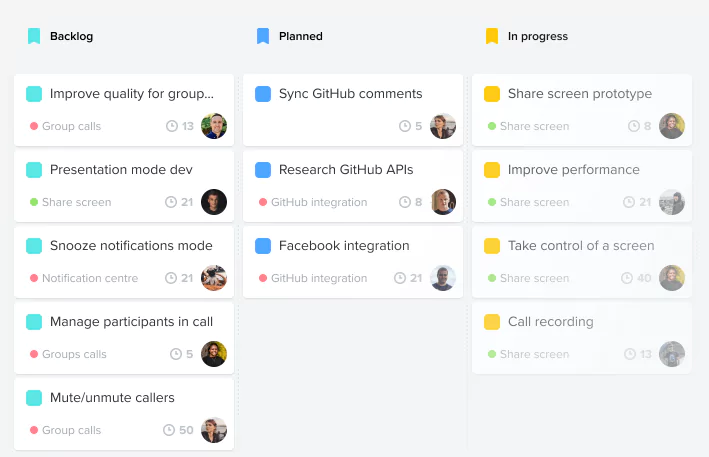
There are different kinds of product roadmap templates available. But if you’re looking to enhance team collaboration, track progress easily, and keep your team focused on delivering new products/services or features, the Kanban template below can be a great pick.
2. The Go-to-Market Strategy Template
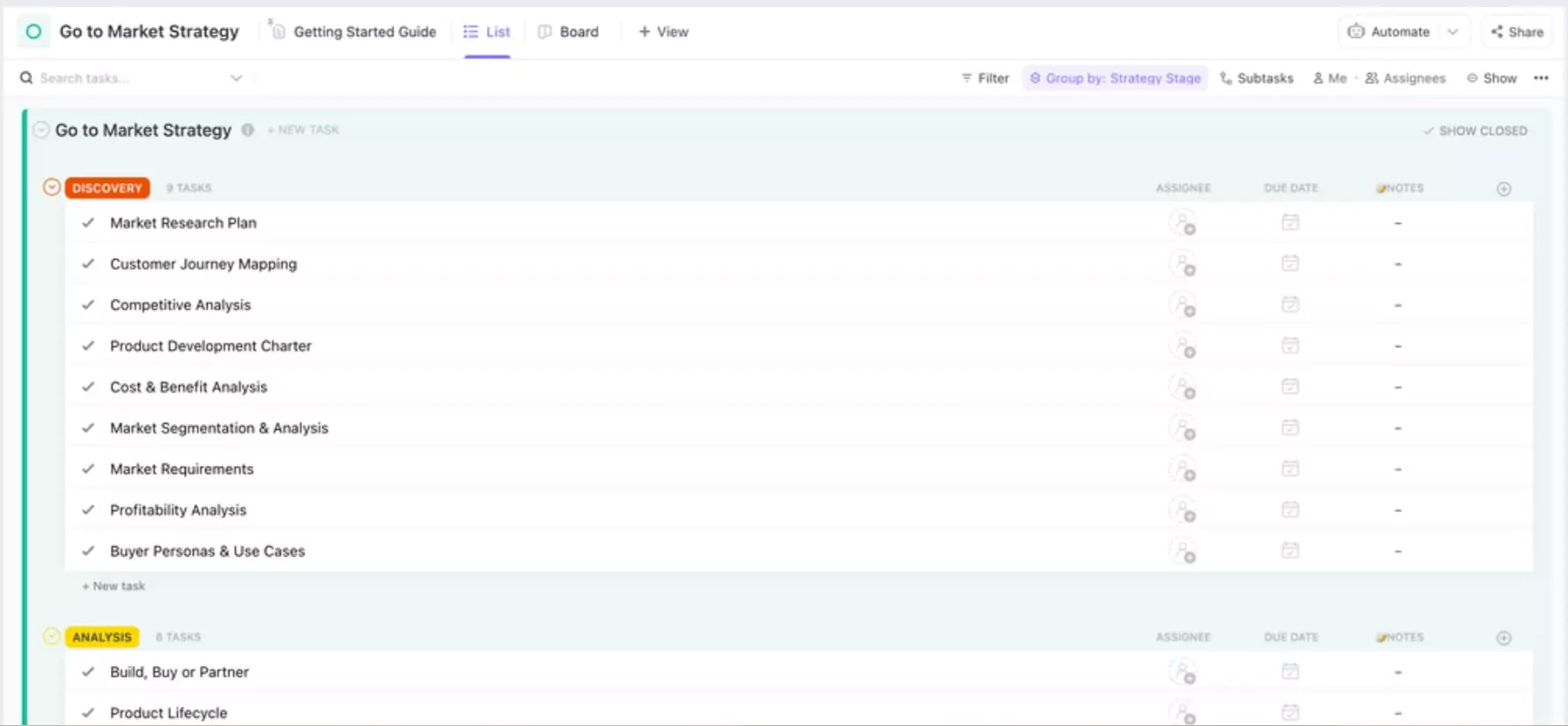
Another important template to have in 2024 is the go-to-market strategy template. Using this template, you can break your go-to-market strategy down to specific, actionable steps for easy implementation and tracking.
A good go-to-market strategy template allows you to outline activities that should be completed at every stage of the product or service launch. The stages may vary from one company to another, but they generally include:
- Discovery Stage
- Analysis Stage
- Research Stage
- Planning Stage
- Implementation Stage
- Reporting Stage
For instance, at the discovery stage, your team can prepare a market research plan, develop buyer personas, determine product or service use cases and conduct a profitability analysis.
Knowing which tasks are to be completed in every stage makes it easier for your teams to organize, navigate, collaborate, and track progress. Most go-to-market strategy templates are customizable, which makes it easy for teams to:
- Breakdown broad tasks into smaller subtasks
- Set due dates
- Edit tasks or activities
- Assign team members specific tasks
3. The Go-to-Market Competitor Analysis Template
Another important go-to-market strategy template that’s a must-have in 2024 is the competitor analysis template. Market intelligence is an integral part of every company’s go-to-market strategy. Before launching new products/services or relaunching current ones, companies must know:
- Who their competitors are and what they offer
- Potential buyers’ needs and pain points
- Existing market trends
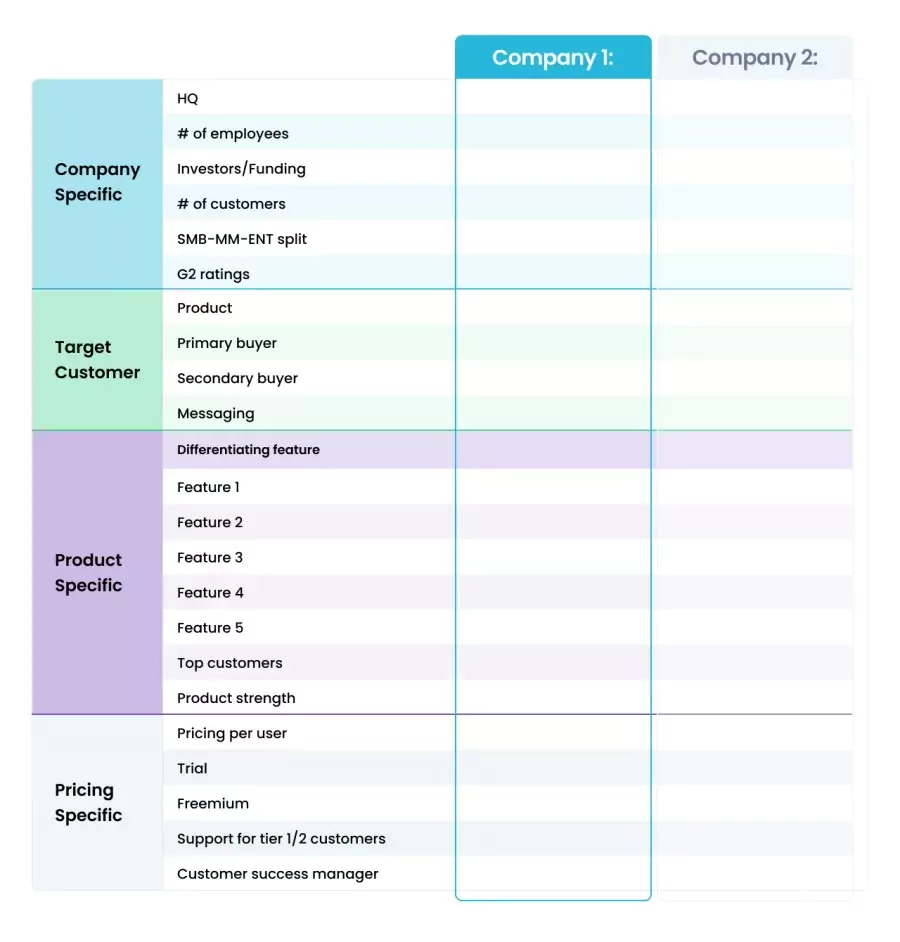
The competitor analysis template allows teams to study and analyze the market faster and effectively. A good template should help you identify different types of competitors, these are:
- Direct competitors offering the same product or service as your company
- Potential competitors could enter the market in the future
- Indirect competitors target the same market with different products or services
- Replacement competitors target the same market with alternative products
- Immediate future competitors not in the market, but are likely to make an immediate entry
- List of competitors and their products/services
- Competitor data like pricing, quality ratings, unique features, and customer satisfaction
- Competitive advantage in your offerings
- The type of competition each player presents
The screenshot below from Leadfeeder is a good example of how to conduct competitor analysis.
4. The Go-To-Market Plan Templates
A go-to-market plan is the other template every B2B company seeking to launch a product or service in 2024 should have.
Marketing enables you to create demand for new products/services. Having a plan can guide your team through the different phases of a B2B marketing campaign, which include:
- Planning marketing campaigns
- Creating marketing content
- Developing content assets
- Planning promotions
- Product testing
- Product launch
- Performance tracking
To ensure your marketing campaigns succeed, opt for a GTM template that allows you to:
- Determine priority levels for marketing activities
- Add activity descriptions
- Set timelines
- Assign tasks
- Track implementation status
- Monitor key performance indicators
Check out this example of a go-to-market plan template.
5. The Return on Investment (ROI) Template
The only way to know whether a go-to-market strategy is successful is to monitor the marketing budget and project initial returns. This is much easier to do when you have an ROI template. The best GTM strategy templates allow you to indicate:
- Marketing campaign expenses
- Months when those expenses were incurred
- Costs and units associated with each expense
- Projected revenue
- Details on profit and hurdle rates
The templates come with inbuilt formulas that ease calculation so you can quickly know how much you budgeted for, the actual expenditure, variances, and ROI. The template should help you determine the maximum amount your company can continue to spend while meeting its ROI goal.
Here is a well-crafted illustration of a downloadable template for Return on Investment (ROI).
Supercharge Your 2024 Go-To-Market Strategy
A poorly implemented go-to-market strategy can lead to huge losses for your company. As 2024 quickly approaches, leverage the templates highlighted above to keep your team focused on the product launch goal, monitor progress, and keep an eye on your ROI. These go-to-market templates will aid you in creating a product roadmap and doing a competitor analysis to monitor budget and ROI.

Chloe Harrington
10 November 2023
Our blog
Latest blog posts
Tool and strategies modern teams need to help their companies grow.

B2B companies must generate leads that are ready to buy their products in order to me...
Chloe Harrington

In the absence of a constant flow of leads, sales teams can't meet their targets and ...

Ethan Harrington

Podcasts and webinars are powerful tools that marketers can use to reach new audience...